
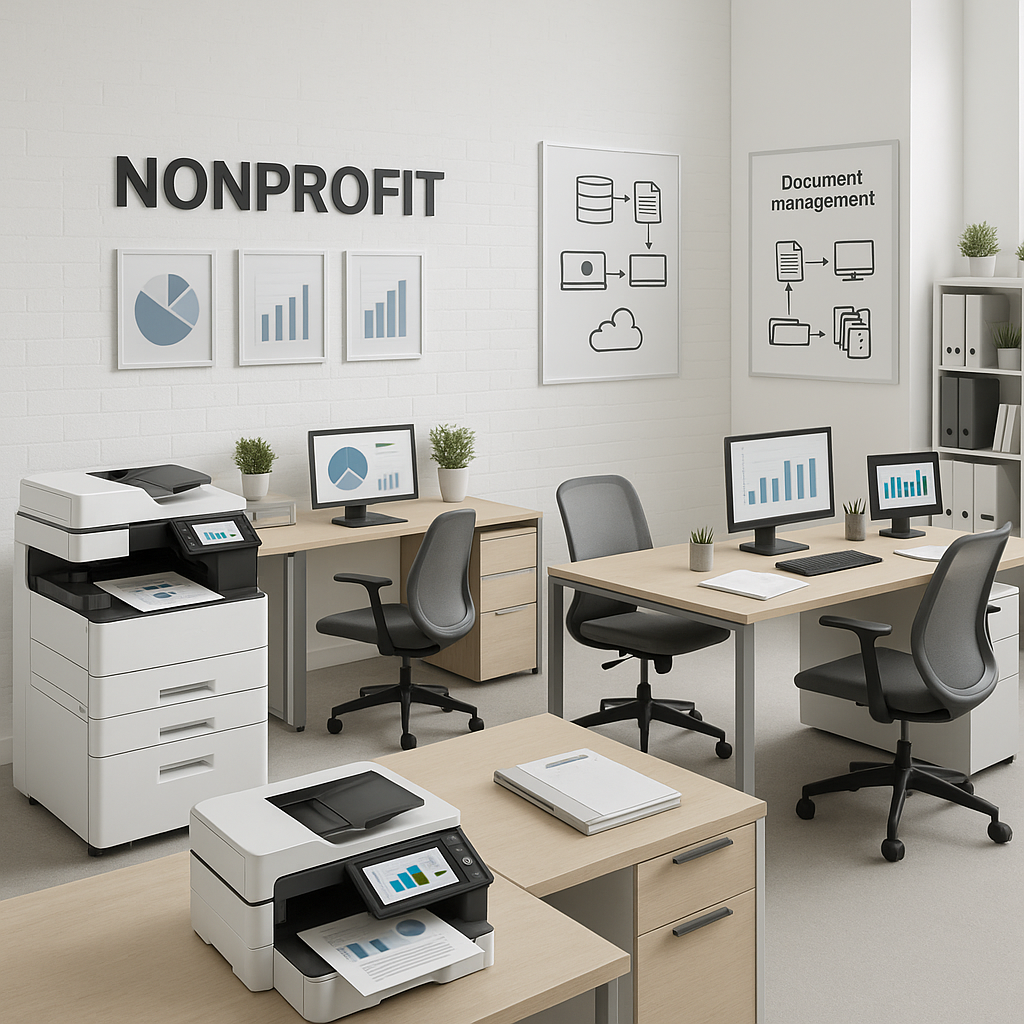
Discover how nonprofit organizations can make strategic decisions about copier acquisition that align with budget constraints, operational needs, and long-term efficiency goals.

Understanding the True Cost of Copier Ownership for Nonprofits
When nonprofit organizations evaluate copier acquisition strategies, the decision extends far beyond the initial purchase price or monthly lease payment. The total cost of ownership encompasses maintenance contracts, consumables, repair expenses, and the hidden costs of equipment downtime that can disrupt mission-critical operations. For nonprofits operating on tight budgets with donor accountability at the forefront, understanding these comprehensive cost structures is essential to making financially responsible decisions.
Purchasing multifunction printers outright requires significant upfront capital investment, which can strain limited budgets and redirect funds from program services. However, ownership eliminates ongoing lease payments and provides long-term asset value. Organizations must factor in depreciation schedules, maintenance expenses that increase as equipment ages, and the cost of technology obsolescence. Modern copiers typically have a productive lifespan of 3-5 years, after which repair costs and efficiency losses begin to outweigh the benefits of continued ownership.
Leasing arrangements transform large capital expenditures into predictable monthly operating expenses, which simplifies budget forecasting and preserves cash flow for program delivery. Many lease agreements bundle maintenance, consumables, and service support into a single monthly payment, providing cost predictability that helps nonprofit finance teams manage donor restrictions and grant requirements. Understanding how cost-per-copy models, service level agreements, and print volume commitments impact the true cost of leasing is critical to avoiding convoluted contracts that don't align with actual organizational needs.
Strategic Advantages of Leasing Multifunction Printers
Leasing offers nonprofit organizations several compelling strategic advantages that extend beyond financial considerations. Technology refresh cycles built into lease agreements ensure that offices maintain access to cutting-edge printing, scanning, and document management capabilities without the burden of equipment disposal or obsolescence. As document security requirements evolve and regulatory compliance standards become more stringent, leased equipment can be upgraded to meet emerging HIPAA-adjacent requirements for organizations handling sensitive donor or client information.
The bundled service model inherent in most lease arrangements provides nonprofits with predictable support structures and dedicated field service that minimizes operational disruptions. When equipment malfunctions occur, leased copiers typically come with guaranteed response times and replacement provisions that keep document workflows functioning smoothly. This reliability is particularly valuable for organizations coordinating fundraising campaigns, volunteer management, and event coordination where document production timelines are critical to mission success.
Leasing also provides flexibility to scale print fleet capacity as organizational needs evolve. Nonprofits experiencing growth, opening new locations, or expanding program services can adjust their equipment portfolio without the financial burden of purchasing additional hardware. This adaptability supports the dynamic nature of mission-driven organizations while maintaining the integrated hardware and software solutions necessary for efficient document management and workflow automation.
When Purchasing Makes Financial Sense for Your Organization
Despite the advantages of leasing, purchasing multifunction printers makes compelling financial sense under specific organizational circumstances. Nonprofits with stable, predictable print volumes and sufficient capital reserves can realize long-term cost savings through equipment ownership. Once the initial investment is recovered, organizations eliminate monthly lease payments and reduce their total cost of ownership over the equipment's productive lifespan. This approach works particularly well for organizations with established IT infrastructure and in-house technical expertise to manage maintenance and support.
Organizations with consistent, high-volume printing requirements may find that ownership provides better cost-per-copy economics over a 5-7 year planning horizon. Production printers and multifunction hardware designed for institutional use can deliver hundreds of thousands of impressions annually, and ownership eliminates the volume-based charges common in lease agreements. For nonprofits processing large-scale donor communications, grant proposals, or educational materials, these volume considerations can translate into substantial savings that directly support program delivery.
Purchasing also makes strategic sense when organizations have specific integration requirements with existing document management systems, print management software, or job accounting platforms. Owned equipment provides greater flexibility for customization and integration with specialized applications like PaperCut MF or YSoft SafeQ without the restrictions sometimes imposed by lease agreements. Additionally, organizations planning to maintain equipment beyond typical lease terms—such as those in stable operational environments with minimal technology change requirements—benefit from the extended useful life that ownership provides.
How Print Fleet Management Optimizes Both Ownership Models
Professional print fleet management transforms both leased and purchased copiers into optimized productivity assets that support nonprofit operational efficiency. Whether organizations choose to lease or buy, implementing comprehensive print management strategies provides visibility into device utilization, cost tracking, and workflow patterns that inform better resource allocation decisions. Print management software integrates with multifunction printers to monitor page volumes, identify cost savings opportunities, and ensure that equipment capacity aligns with actual organizational needs.
Managed print services provide nonprofits with expert partnership that simplifies the technical complexity of maintaining diverse print fleets. These services deliver proactive maintenance monitoring, automated consumables replenishment, and performance optimization regardless of ownership model. For organizations lacking dedicated IT staff, managed print partnerships provide the technical expertise necessary to maintain reliable, secure document workflows while allowing internal teams to focus on mission-critical activities. This support structure is particularly valuable for nonprofits managing multiple locations or coordinating distributed operations.
Print fleet management also addresses the integration challenges that nonprofits face when connecting hardware solutions with document management platforms, job accounting systems, and workflow automation tools. Professional implementation ensures that leased or purchased equipment operates within a cohesive technology ecosystem that supports cost tracking, regulatory compliance, and operational efficiency goals. By establishing clear service level agreements, performance metrics, and support protocols, print fleet management transforms copier acquisition from a simple equipment decision into a strategic operational investment that enhances organizational capacity.
Making the Right Decision for Your Mission-Driven Organization
The buy-versus-lease decision for nonprofit copiers ultimately depends on a comprehensive assessment of your organization's financial position, operational requirements, and strategic priorities. Begin by evaluating your current and projected print volumes, understanding your cash flow constraints and capital availability, and identifying your technology refresh expectations. Organizations with limited upfront capital, fluctuating print demands, or rapidly evolving technology needs typically benefit from leasing arrangements that provide flexibility and predictable costs. Conversely, nonprofits with stable operations, sufficient capital reserves, and long-term equipment planning horizons may realize greater value through strategic purchases.
Engage with trusted technology partners who understand the unique challenges facing mission-driven organizations. The right partner provides transparent contract consulting, helps you navigate the complexity of service agreements, and delivers integrated hardware and software solutions aligned with your operational goals. Look for providers with demonstrated experience serving nonprofit organizations, proven expertise in document management and workflow automation, and a commitment to long-term partnership rather than transactional equipment sales. The quality of your technology partnership often matters more than the acquisition model itself.
Remember that the most effective approach may involve a hybrid strategy that combines purchased equipment for stable, high-volume applications with leased devices for specialized needs or temporary capacity expansions. Focus on total cost of ownership rather than simple monthly payments, prioritize service reliability and response times that protect against operational disruptions, and ensure that your chosen approach supports your document security and compliance requirements. By aligning your copier acquisition strategy with your organizational mission and operational realities, you transform print fleet management from an administrative burden into a strategic asset that enhances your capacity to serve your community and advance your cause.